Chest physiotherapy for babies and children in Barcelona
A blocked nose that stops your baby feeding, a congested baby who sleeps badly, a child with asthma: I see babies from birth, children and teenagers in Barcelona, in the Eixample. This page also sets out what respiratory physiotherapy can and cannot do.
Is this for me?
My baby's nose is blocked and they can't feed or sleep
Blocked nose, common cold (nasopharyngitis)
A young baby can only breathe through the nose. When the nose is full of mucus, feeding and sleeping become difficult. I rinse your baby's nose with saline solution, then show you how to do it.
Read the article →The doctor said my baby has bronchiolitis
Acute bronchiolitis in babies
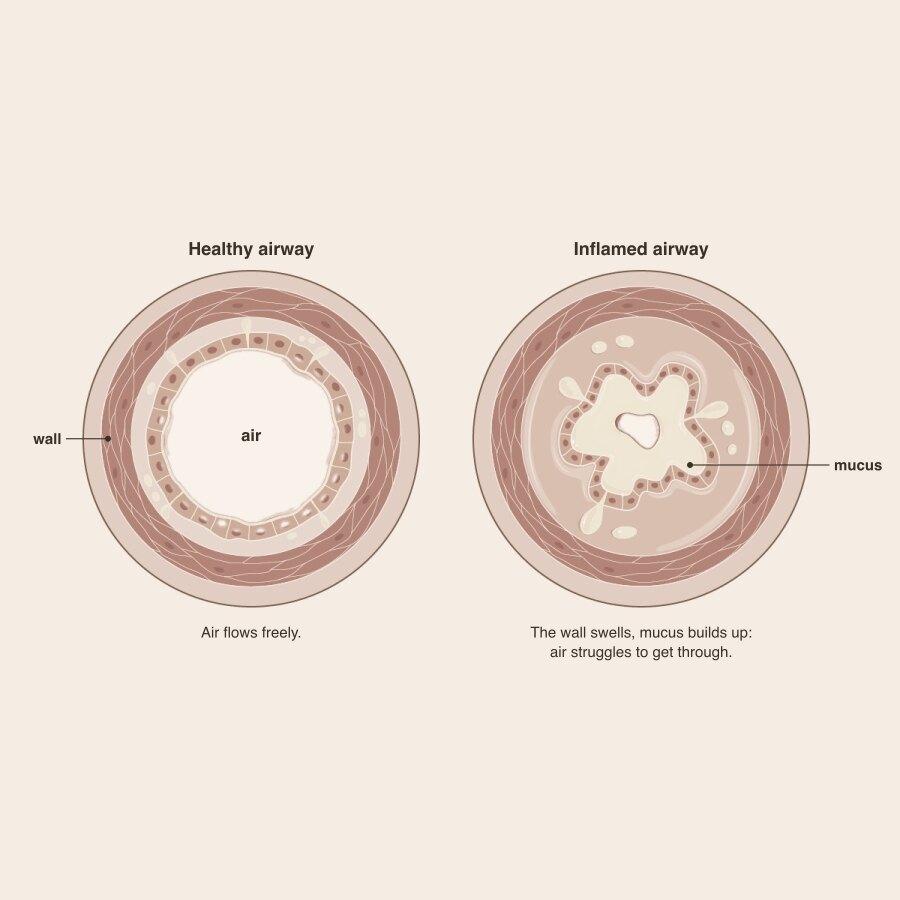
A virus reaches the smallest airways, which swell and fill with mucus. Your baby coughs, breathes fast, and they wheeze. We start with the nasal rinse, which I teach you to do at home.
Read the article →My baby sounds chesty, I can hear wheezing or rattling when they breathe
Mucus in the airways
Secretions, or phlegm, get in the way of the air, in the nose or lower down in the airways. I watch their breathing first; if a sign worries me, I refer you to the doctor before doing anything.
Read the article →The 5 other situations
Call the emergency services (112 in Spain, 15 in France) if your baby shows any of these signs. They turn blue around the mouth. They go floppy or seem to pass out. They have pauses in their breathing. Their breathing becomes slow and they still struggle to breathe. They stop responding, are very tired, sleep all the time, or whimper. They refuse their bottles or the breast. Physiotherapy comes after a doctor's opinion, never instead of it. Asthma, in children and adults alike: if an attack does not ease with the prescribed reliever treatment, call the emergency services (112 in Spain, 15 in France).
I see babies, children and teenagers, and above all babies under two.
You may recognise your child, or yourself, in one of these sentences. Select the one that sounds like you.
My child is still coughing, weeks after bronchiolitis
A lingering cough
After bronchiolitis, a mild cough can last up to four weeks. Beyond four weeks, or if they are still struggling to breathe, I refer you to their doctor.
Read the article →My baby keeps getting bronchiolitis, this isn't the first time
Repeated episodes of wheezy breathing
When wheezy episodes keep coming back, the doctor looks for other causes, such as asthma or an allergy. I work with your child's paediatrician: their opinion comes first.
Read the article →My child has asthma
Asthma in children and teenagers
The main treatment for asthma is inhaled medicine, prescribed and monitored by the doctor. Together we learn breathing, posture and relaxation exercises.
See what I do during the session →My child has cystic fibrosis
Cystic fibrosis
The mucus is thick and sticky; it clogs the airways and is hard to clear. Airway clearance is part of their care programme, which your child's medical team oversees.
See what I do during the session →Does this sound like you? The session lasts thirty minutes and starts with your questions.
Is your baby under two months old, born premature or living with another condition?
For France's national health authority (HAS), these situations call for closer watching during bronchiolitis. Is your baby under two months old, born premature, or living with a condition of the heart, lungs, muscles or immune system? Have them seen by a doctor without waiting.
The session
30 minutes · €50
It lasts thirty minutes. You stay with your child from start to finish. I explain each step before I do it, and nothing happens without your agreement.
We talk
How long your child has been struggling, what the doctor said, how they are feeding and sleeping, and whether they have a temperature.
I watch your child
Their breathing, their colour, how alert they are. If I see a sign of something serious, the session stops there and I refer you to the paediatrician or to A&E.
I rinse their nose
With saline solution, from a single-dose vial or a syringe depending on their age: a generous amount, matched to their mucus, given slowly, at low pressure, like a little shower. It does not hurt, even if it is unpleasant. I show you how, step by step. At home, use the method I show you; the Assurance Maladie steps, with single-dose vials, are in the article.
A gentle technique, if it helps
Autogenic drainage is always gentle: my hands follow the movement of their chest, to help them breathe more easily and bring the mucus up. I explain it before I do it, and you take part. It is done in two stages, with a pause so your baby can rest. Clapping (chest percussion) and vibrations are contraindicated by France's national health authority.
You leave knowing what to do
How to rinse the nose at home, how many times a day, and the signs that mean you should see the doctor again.
What to bring and plan
- Come a while after your baby's last feed: the nasal rinse is done before feeds, to avoid vomiting.
- Bring the doctor's report, if there is one.
- Tell me your child's age when you book.
After the session
The nasal rinse at home, how long bronchiolitis lasts, when to come back
I do not set a number of sessions in advance. Most of the time, bronchiolitis gets better without any particular treatment. The acute phase lasts ten days on average, and the first two to three days need the most attention. Sometimes one session is enough, long enough for you to feel at ease with the nasal rinse.
- At home: the nasal rinse, before feeds and before bedtime, four to six times a day when the nose is blocked.
- Smaller, more frequent feeds.
- Nobody smokes in the room where your baby is. The bedroom stays at 19°C.
- Put your baby to sleep on their back, on a firm, flat mattress, as the NHS and France's HAS advise. If you have been told to raise the cot, ask your paediatrician.
- You keep an eye on their breathing, how alert they are and how much they drink, especially in the first two to three days.
My aim is for you to manage on your own. You come back if you feel you need to.
What I do during the session
The nasal rinse, autogenic drainage, what the guidelines say
Not all chest physiotherapy techniques are equal. The studies draw clear lines between them, and so do the guidelines.
- Clearing the nose and throat (rhinopharyngeal clearance)The nasal rinse
- Recommended by France's national health authority (HAS), several times a day; it also asks for a baby's nose to be rinsed before their breathing is assessed. A trial of 133 babies found better oxygen levels five minutes after a saline rinse.
- Prolonged slow expiration, assisted autogenic drainageSlow, gentle hands-on techniques
- Slow expiration techniques might slightly ease breathing difficulty in the short term: the evidence is weak, and the trials mostly took place in hospital. Two trials look at assisted autogenic drainage, one in hospital, the other in a clinic: severity scores improved, and in the second, prolonged slow expiration did better. Three trials of slow techniques report no notable side effects; the Cochrane review asks for these effects to be recorded more carefully. Outside hospital, the HAS does not recommend these techniques, for lack of data.
- Increased expiratory flow, induced coughForced expiration techniques
- No effect on how long the illness lasts in a French trial of 496 babies in hospital, and more vomiting. Not recommended in hospital by the HAS.
- Clapping, vibrations, postural drainageTapping on the chest
- No benefit. Contraindicated in bronchiolitis by the HAS.
The session relies on a gentle hands-on technique, autogenic drainage, and on the nasal rinse. Clapping and vibrations are contraindicated by France's national health authority. In older children and adults, autogenic drainage uses the breath going out to move secretions from the small airways up to the larger ones; in babies, the trials speak of assisted autogenic drainage. For older children and teenagers, the session also includes breathing education, posture, relaxation and exercises to repeat at home.
For these ages, the studies say this. In children with asthma, there are too few trials of breathing exercises to draw a conclusion (Macêdo et al., Cochrane, 2016); in adults with asthma, these exercises might improve quality of life, with moderate to very low certainty of evidence (Santino et al., Cochrane, 2020). In cystic fibrosis, airway clearance techniques are recommended as part of a full care programme; the studies mainly measure their short-term effect, with low to very low certainty of evidence (Warnock and Gates, Cochrane, 2023). In chronic obstructive pulmonary disease (COPD), they are safe and their benefit is small (Osadnik et al., Cochrane, 2012).
No study done outside hospital shows that chest physiotherapy shortens bronchiolitis. In hospital, two small trials of slow techniques found an earlier discharge; the Cochrane review draws no conclusion from them on how long the illness lasts.
When to see the doctor or go to A&E first
The warning signs from France's national health authority and the Spanish Society of Paediatric Emergencies
These signs come from the sheet that France's national health authority (HAS) gives to parents (November 2019).
- Call the emergency services (112 in Spain, 15 in France)
- They turn blue around the mouth. They go floppy or seem to pass out. They have pauses in their breathing. Their breathing becomes slow and they still struggle to breathe. They stop responding, are very tired, sleep all the time, or whimper. They refuse their bottles or the breast.
- See the doctor again, if any of these signs persists after a nasal rinse
- They are tired, less responsive or very agitated. Their breathing has become faster. They start to struggle to breathe and their chest sinks in. They feed less well over several feeds in a row.
The Spanish Society of Paediatric Emergencies (SEUP) asks you to go to A&E (urgencias) if your baby's breathing gets worse or faster, if they stop breathing for a few seconds or their lips turn blue or purple, if they struggle with feeds, refuse them or vomit, if their nappy stays dry and their mouth and tongue are dry, if they are very listless or whiny, or if they have a very high temperature.
France's national health insurance (Assurance Maladie) asks for this new appointment to take place the same day.
Is your baby under two months old, born premature, or living with a condition of the heart, lungs, muscles or immune system? Have them seen by a doctor without waiting.
- For a first episode of bronchiolitis before twelve months, the HAS does not recommend chest physiotherapy to clear the airways. It recommends the nasal rinse.
- Asthma, in children and adults alike: if an attack does not ease with the prescribed reliever treatment, call the emergency services (112 in Spain, 15 in France).
- I do not make medical diagnoses. A baby who is struggling to breathe is examined by a doctor first.
- I do not replace the paediatrician or A&E, and I work with them.
- I do not do home visits.
Prices, insurance, address
€50 for a 30-minute session · Carrer del Bruc 145
- Respiratory physiotherapy
- 30 minutes · €50
What about insurance? I work independently, outside insurers' networks. You pay for the session and I give you an invoice. Your private or international health insurance then reimburses you in full, in part or not at all: it depends on your policy.
Carrer del Bruc 145, 08037 Barcelona (Eixample). Monday to Friday, 9am to 8pm. I see patients in French, Spanish, English and Portuguese.
How I work
Nothing without explanation, nothing without your agreement · my training
- I do nothing without explaining it to you first, and nothing without your agreement. You can ask me to stop at any moment.
- I teach you the techniques that help, so that you don't need me.
- I offer nothing revolutionary: techniques learnt through my training and my years of experience, adapted to each patient.
- Physiotherapy degree from ISEK, Brussels (2004)
- Specialisation in respiratory physiotherapy, France (2004)
- Practice in a clinic with Hugues Gauchez in Lille, and at La Timone hospital in Marseille: babies with bronchiolitis, asthma, cystic fibrosis
- Registered with the Col·legi de Fisioterapeutes de Catalunya, no. 18060
Frequently asked questions
Is it recommended for bronchiolitis? Is it dangerous? When should I go to A&E?
- Is chest physio recommended for bronchiolitis?
- For a first episode before twelve months, France's national health authority (HAS) does not recommend chest physiotherapy to clear the airways, but rather the nasal rinse, several times a day. Slow, gentle techniques might slightly ease breathing difficulty in the short term, with weak evidence; for a child over twelve months or for repeated episodes, which this recommendation does not cover, ask their doctor.
- Is chest physio for babies banned?
- No. In France, clapping, vibrations and postural drainage are contraindicated in bronchiolitis, and increased expiratory flow is not recommended in hospital, where trials show no benefit. Outside hospital, airway clearance techniques are not recommended for lack of data, and the HAS calls for new studies.
- If it isn't recommended, what does a session offer?
- You learn the nasal rinse, the step the HAS recommends several times a day. Slow expiration techniques might slightly ease breathing difficulty in the short term: the evidence is weak, and no study shows that they shorten the illness at home.
- Is it dangerous? Does it hurt?
- The nasal rinse does not hurt, even if it is unpleasant, and autogenic drainage, when it is useful, is always a gentle technique; you can ask me to stop at any moment. Three trials of slow techniques report no notable side effects, and the Cochrane review asks for these effects to be recorded more carefully; in a French trial, forced techniques caused more vomiting and brief episodes of breathing instability. Clapping and vibrations are contraindicated by the HAS.
- What is autogenic drainage, and how is it done?
- It is a breathing technique developed by Jean Chevaillier in 1967. It uses the air you breathe out: by adjusting how deep and how fast you breathe, it moves mucus up from the small airways to the larger ones, where it can be cleared. An older child or an adult learns it and does it alone; it takes training and concentration. A baby cannot do it alone, so this is assisted autogenic drainage. My hands follow the movement of their chest, in two stages, with a pause so they can rest, and you take part. In cystic fibrosis, a Cochrane review (8 trials, 212 people aged 7 to 63) finds it neither better nor worse than other airway clearance techniques (Burnham et al., 2021). In teenagers and adults who produce mucus, for example with cystic fibrosis or chronic obstructive pulmonary disease (COPD), a French review places it among the three best-studied manual techniques, with an intermediate level of evidence (Cabillic et al., 2018).
- Will it make my baby better faster?
- I cannot promise that. Most of the time, bronchiolitis gets better without any particular treatment, in ten days on average. No study shows that physiotherapy shortens it at home.
- When should I go to A&E?
- Call the emergency services (112 in Spain, 15 in France) if your baby shows any of these signs. They turn blue around the mouth. They go floppy or seem to pass out. They have pauses in their breathing. Their breathing becomes slow and they still struggle to breathe. They stop responding, are very tired, sleep all the time, or whimper. They refuse their bottles or the breast. The Spanish Society of Paediatric Emergencies (SEUP) asks you to go to A&E (urgencias) if your baby's breathing gets worse or faster, if they stop breathing for a few seconds or their lips turn blue or purple, if they struggle with feeds, refuse them or vomit, if their nappy stays dry and their mouth and tongue are dry, if they are very listless or whiny, or if they have a very high temperature. See the doctor again if any of these signs persists after a nasal rinse. They are tired, less responsive or very agitated. Their breathing has become faster. They start to struggle to breathe and their chest sinks in. They feed less well over several feeds in a row.
- How long does bronchiolitis last?
- The acute phase lasts ten days on average. A mild cough can last up to four weeks. If your child is still struggling to breathe after that, see the doctor again.
- My baby is coughing: what should I do?
- During bronchiolitis, coughing helps clear secretions from the airways. It usually lasts eight to ten days, sometimes several weeks. Cough syrups and mucus-thinning medicines are contraindicated in babies. Antibiotics are not recommended, unless the doctor finds or strongly suspects a bacterial infection (France's national health authority, HAS, 2019). See the doctor again if the temperature rises after a few days, if the mucus becomes thick, yellow or greenish, or if any of the warning signs on this page appear.
- My child has mucus in their throat or chest: what should I do?
- Rinse their nose with saline, before feeds and before bedtime: a young baby can only breathe through the nose, and the rinse clears it. Coughing helps bring the mucus up; cough syrups and mucus thinners are not given before the age of two. Once your child can blow their nose, they do it after the rinse. Get urgent medical advice if they are struggling to breathe, or if they are under three months old and have a temperature. See the doctor if the cough and the nose are no better after ten days (France's national health insurance, Assurance Maladie).
- My baby sounds congested without a cold, since birth, or after feeds?
- Show them to their paediatrician. Bronchiolitis starts with a cold. In newborns especially, difficulty breathing can have other causes, which the doctor needs to look for (HAS). A baby who coughs or hiccups during feeds, and brings up milk afterwards, may have reflux: it usually starts before eight weeks and gets better around the first birthday (NHS). In the meantime, rinse their nose before feeds, not after, to avoid vomiting.
- Bronchiolitis at three months, six months or one year: what changes?
- Bronchiolitis affects children under two, and babies under six months are more at risk of a serious illness (NHS). Before three months, any temperature needs urgent medical advice (Assurance Maladie). Before two months, or after a premature birth, the HAS asks for closer watch. The warning signs on this page apply at every age. The French guideline covers the first episode before twelve months. After the first birthday, ask the doctor whether physiotherapy will help. From a second bronchiolitis soon after the first, the doctor looks for other causes, such as asthma or an allergy.
- How many times a day should I rinse my baby's nose?
- Before feeds and before bedtime, so four to six times a day, more if the nose is very blocked. One vial per nostril; if the nose is clear after the first, the second is not needed. These are the guidelines of France's national health insurance (Assurance Maladie), which describes the technique from the first months. It is suitable from the first week: the French guideline, which also covers newborns, asks for the nose to be cleared. Before six months, follow the single-dose vial steps, with the head turned to the side. A newborn who is coughing, breathing badly or has a temperature is seen by a doctor first.
- Nasal rinse or nasal aspirator?
- The nasal rinse. According to France's national health insurance, a nasal aspirator clears the nose less well.
- How should I put a congested baby to sleep?
- Put your baby to sleep on their back, on a firm, flat mattress, as the NHS and France's HAS advise. If you have been told to raise the cot, ask your paediatrician. Rinse their nose just before bedtime; when they are awake, holding them upright can help them breathe.
- How many sessions will we need?
- I do not set a number in advance. Sometimes one session is enough, long enough for you to feel at ease with the nasal rinse.
- How much does a session cost? Is it covered by insurance?
- The session lasts 30 minutes and costs €50. You pay for the session, I give you an invoice, and your health insurance reimburses you according to your policy.
- Do I need a prescription or referral?
- No. You can book directly. It is always better for your baby to have seen a doctor first. In an emergency, I refer you to the hospital.
- From what age do you see babies?
- From birth. Before two months, a baby who is coughing, breathing badly or has a temperature is seen by a doctor first, without waiting. Before three months, any temperature needs urgent medical advice. For an older baby, it is always better for a doctor to have seen them first. At three, four or six months, the session follows the same steps; only the nasal rinse changes with age, with a single-dose vial or a syringe.
- My child is between one and six: is chest physio for them?
- Yes. I see children of all ages, up to their teens. Until about two, a child cannot yet blow their nose or cough effectively: the session is the same as for a baby, with the nasal rinse and a gentle technique if it helps. Once they can blow their nose, they do it after the rinse. I also see children with asthma or cystic fibrosis. After the first birthday, the French bronchiolitis guideline no longer applies: wheezy episodes that keep coming back are seen by the doctor first, who looks for causes such as asthma or an allergy.
- Do I stay with my baby during the session?
- Yes. You stay with them from start to finish, and I explain every step.
- Do you also see older children?
- Yes: children and teenagers for asthma or cystic fibrosis, teenagers also for chronic bronchitis. If an asthma attack does not ease with the prescribed reliever treatment, call the emergency services.
- Do you do home visits? Do you see babies at weekends?
- No, I do not do home visits. I see patients at the clinic, Carrer del Bruc 145, Monday to Friday, 9am to 8pm, and I can see your baby the same day if needed. At weekends, I see babies I am already treating, when their care requires it. Otherwise, if you are worried about your baby, call their doctor or the emergency services.
What the research says
Three official guidelines, the public pages of two health bodies and fifteen studies: what they show and what they don't
Chest physiotherapy for babies is debated, and parents have a right to know why. Here are the reference texts. For each one, the list says what it shows and what it does not.
The nasal rinse is necessary. Clapping, vibrations and postural drainage are contraindicated. Increased expiratory flow is not recommended in hospital. At home, for lack of data, airway clearance is not recommended: ten experts out of thirteen voted for this point, three voted against, and all of them call for a trial outside hospital. Chest physiotherapy may be considered for a child with another condition, a chronic lung disease or a neuromuscular one. The guideline covers newborns and babies under twelve months, at their first episode; it excludes older children and repeated wheezy episodes. After a second episode soon after the first, other diagnoses should be considered, such as asthma or an allergy. In newborns, other causes of breathing difficulty should always be considered.
Haute Autorité de santé (France's national health authority), Conseil national professionnel de pédiatrie. Prise en charge du premier épisode de bronchiolite aiguë chez le nourrisson de moins de 12 mois. Clinical practice guideline, November 2019.
For going home: rinse or suction the mucus from the nose, and split feeds into smaller ones. Physiotherapy is listed among the traditional measures that have proved ineffective and sometimes harmful, with no distinction between techniques. On sleeping position, this protocol differs from the French recommendation (on the back, lying flat): ask your paediatrician.
Sociedad Española de Urgencias de Pediatría. Diagnóstico y tratamiento de la bronquiolitis aguda en Urgencias. Protocolos, 4th edition, 2024.
No chest physiotherapy for bronchiolitis, except in children who have another condition that makes clearing secretions more difficult.
National Institute for Health and Care Excellence. Bronchiolitis in children: diagnosis and management (NG9). UK, 2015 guideline.
17 trials, 1,679 babies. Percussion and forced techniques make no difference, and forced techniques can cause serious side effects in severe cases. Slow techniques might slightly improve the severity score (7 trials, 434 babies, low certainty of evidence), mainly in hospital. No effect shown on how long oxygen is needed or on parents' views.
Roqué-Figuls M et al. Chest physiotherapy for acute bronchiolitis in paediatric patients between 0 and 24 months old. Cochrane Database of Systematic Reviews, 2023.
496 babies in hospital across seven French units. Increased expiratory flow with induced cough did not shorten recovery (2.0 days vs 2.3; difference not significant). Vomiting and brief episodes of breathing instability were more frequent during sessions.
Gajdos V et al. Effectiveness of chest physiotherapy in infants hospitalized with acute bronchiolitis. PLoS Medicine, 2010.
192 babies seen in a clinic, in Spain. Assisted autogenic drainage and prolonged slow expiration improved severity scores straight after the session and 48 hours later, with no notable side effects. Prolonged slow expiration did better than assisted autogenic drainage. The trial measures neither how long the illness lasts nor hospital admissions. Several authors work at the clinic where the trial took place.
González-Bellido V et al. Effectiveness of airway clearance techniques versus control in non-hospitalized infants with moderate acute viral bronchiolitis. Clinics, 2025.
103 children under 24 months in hospital in Brussels, 93 analysed. Recovery in 3.6 days with assisted autogenic drainage, vs 4.5 days without physiotherapy.
Van Ginderdeuren F et al. Effectiveness of airway clearance techniques in children hospitalized with acute bronchiolitis. Pediatric Pulmonology, 2017.
80 babies in hospital. Lower severity score ten minutes and two hours after the session; a low score reached sooner (2.6 days vs 4.4) and a shorter hospital stay; oxygen levels unchanged; no side effects recorded.
Conesa-Segura E et al. Prolonged slow expiration technique improves recovery from acute bronchiolitis in infants: FIBARRIX randomized controlled trial. Clinical Rehabilitation, 2019.
20 babies in hospital. Prolonged slow expirations followed by induced cough: an improvement thirty minutes after the session, no difference two hours later; same length of hospital stay; no side effects.
Postiaux G et al. Evaluation of an alternative chest physiotherapy method in infants with respiratory syncytial virus bronchiolitis. Respiratory Care, 2011.
42 babies in hospital. The slow technique changed neither the amount drunk in 24 hours, nor sleep, nor severity.
Combret Y et al. Effect of a prolonged slow expiration technique on 24-h food intake in children hospitalized for moderate bronchiolitis. Italian Journal of Pediatrics, 2024.
133 babies in A&E. Five minutes after a saline nasal rinse, oxygen levels were better (95% vs 93%). The breathing difficulty score did not change.
Schreiber S et al. Nasal irrigation with saline solution significantly improves oxygen saturation in infants with bronchiolitis. Acta Paediatrica, 2016.
4 trials, 569 children. The nasal rinse relieves nose symptoms. It does not change breathing symptoms. It appears to be safe.
Cabaillot A et al. Saline nasal irrigation for acute upper respiratory tract infections in infants and children. Paediatric Respiratory Reviews, 2020.
The steps of the nasal rinse, before feeds and bedtime, four to six times a day. During bronchiolitis: a doctor's appointment the same day, sleeping on the back, smaller feeds. Cough medicines and mucus thinners are contraindicated in young children. For a cold: urgent advice before three months if there is a temperature, or if breathing is difficult; see a doctor if the cough and the nose are no better after ten days; no cough suppressants or mucus thinners before two. Once a child can blow their nose, they do it after the rinse.
Assurance Maladie (ameli.fr, France's national health insurance). Comment pratiquer un lavage de nez chez un enfant ? (page dated 26 March 2026); Bronchiolite : que faire ? (page dated 3 July 2026); Reconnaître la rhinopharyngite du bébé et de l'enfant (page dated 4 February 2026); Rhinopharyngite de l'enfant : que faire et quand consulter ? (page dated 5 February 2026).
12 trials, 194 participants with cystic fibrosis. These techniques are recommended as part of a full care programme. They might increase mucus clearance in the short term (low to very low certainty of evidence). The long-term effect is not known.
Warnock L, Gates A. Airway clearance techniques compared to no airway clearance techniques for cystic fibrosis. Cochrane Database of Systematic Reviews, 2023.
3 trials, 112 children. The authors draw no reliable conclusion.
Macêdo TM et al. Breathing exercises for children with asthma. Cochrane Database of Systematic Reviews, 2016.
22 trials, 2,880 adults. Breathing exercises might improve quality of life; the certainty of evidence ranges from moderate to very low.
Santino TA et al. Breathing exercises for adults with asthma. Cochrane Database of Systematic Reviews, 2020.
28 trials, 907 people. Airway clearance techniques are safe; the benefits are small.
Osadnik CR et al. Airway clearance techniques for chronic obstructive pulmonary disease. Cochrane Database of Systematic Reviews, 2012.
The main treatment for asthma is inhaled medicine. Call the emergency services if an attack gets worse or does not ease after the maximum dose of reliever treatment. Bronchiolitis affects children under two; under six months, the risk of serious illness is higher. Reflux in babies shows, among other signs, as coughing or hiccupping during feeds and milk brought up afterwards; it usually starts before eight weeks and gets better around the first birthday.
National Health Service (UK). Asthma (page accessed 11 November 2026); Bronchiolitis; Reflux in babies (pages accessed 15 November 2026).
Autogenic drainage, developed by Jean Chevaillier in 1967, uses exhaled air to move mucus from the small airways to the larger ones; it takes training and concentration. 8 trials, 212 people aged 7 to 63 with cystic fibrosis: it does neither better nor worse than other airway clearance techniques. Low to very low certainty of evidence.
Burnham P, Stanford G, Stewart R. Autogenic drainage for airway clearance in cystic fibrosis. Cochrane Database of Systematic Reviews, 2021.
A review of 63 articles, mostly in people who produce mucus (cystic fibrosis, bronchiectasis, COPD). Only ELTGOL, autogenic drainage and the active cycle of breathing techniques reach an intermediate level of evidence (B); the other techniques have less support. The authors point to the lack of useful data.
Cabillic M, Gouilly P, Reychler G. Manual airway clearance techniques in adults and adolescents: What level of evidence? Revue des maladies respiratoires, 2018 (article in French).