
Is chest physio helpful for my baby's bronchiolitis?
For a first bronchiolitis before twelve months, the French guidelines advise rinsing the nose several times a day and keeping a close eye on your baby, not chest physiotherapy to clear the airways. Slow, gentle techniques might slightly ease breathing difficulty in the short term, with weak evidence. No study shows that they shorten the illness at home.
What is happening
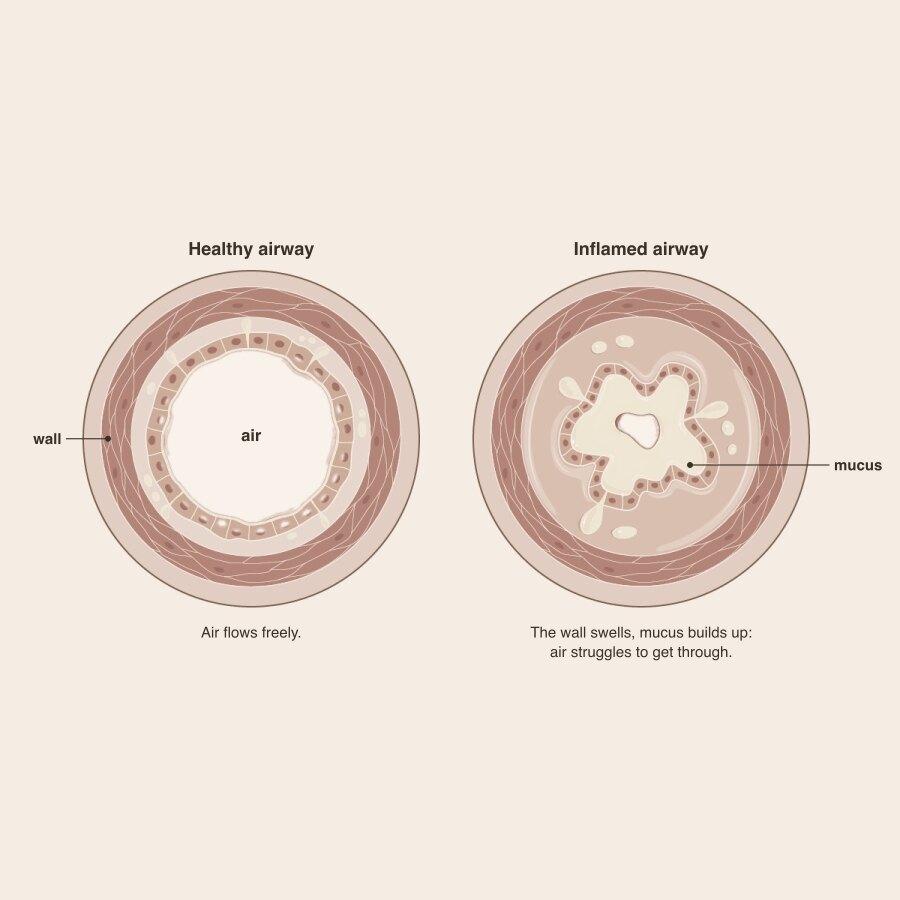
Bronchiolitis is a viral infection of the bronchioles, the smallest airways in the lungs. It starts like a cold. Then your baby coughs, breathes fast, and they wheeze. The acute phase lasts ten days on average, and the first two to three days need the most attention. A mild cough can last up to four weeks. No medicine treats bronchiolitis itself. Most of the time, it gets better without any particular treatment.
When to seek help
Call the emergency services (112 in Spain, 15 in France) if your baby shows any of these signs. They turn blue around the mouth. They go floppy or seem to pass out. They have pauses in their breathing. Their breathing becomes slow and they still struggle to breathe. They stop responding, are very tired, sleep all the time, or whimper. They refuse their bottles or the breast. See the doctor again if any of these signs persists after a nasal rinse. They are tired, less responsive or very agitated. Their breathing has become faster. They start to struggle to breathe and their chest sinks in. They feed less well over several feeds in a row.
What the guidelines say
- In France (France's national health authority, HAS, 2019): the nasal rinse is necessary. Clapping, vibrations and postural drainage are contraindicated. Increased expiratory flow is not recommended in hospital. At home, for lack of data, chest physiotherapy to clear the airways is not recommended.
- In Spain (Spanish Society of Paediatric Emergencies, SEUP, 2024): rinsing or suctioning the nose, smaller and more frequent feeds. Physiotherapy is listed among the measures that do not work and are sometimes harmful.
- In the UK (NICE, 2015): no chest physiotherapy, except in children who have another condition that makes clearing secretions difficult.
The French recommendation covers the first episode, before twelve months. When bronchiolitis keeps coming back, or after twelve months, ask your child's doctor.
Not all techniques are equal
- Tapping on the chest (clapping, vibrations): no benefit.
- Forced expiration techniques: no effect on recovery, and more vomiting and brief episodes of breathing instability during sessions.
- Slow expiration techniques: a slight to moderate improvement in the severity score, with weak evidence. The trials mostly took place in hospital.
What you can do today
- Rinse your baby's nose with saline solution, before feeds and before bedtime.
- Offer smaller, more frequent feeds, and keep an eye on their breathing, how alert they are and how much they drink.
- Put your baby to sleep on their back, on a firm, flat mattress, as the NHS and France's HAS advise. If you have been told to raise the cot, ask your paediatrician.
How to clear my baby's nose with saline, step by step →
How I treat it
Your baby is examined by a doctor first. The session includes the nasal rinse, which I teach you, and together we go through the signs that call for the doctor. For a first bronchiolitis before twelve months, the HAS does not recommend airway clearance techniques outside hospital. Clapping and vibrations are contraindicated by the HAS. No study done outside hospital shows that the session shortens bronchiolitis.
Respiratory physiotherapy: the session, the price, my methods →
What the research says
Across 17 trials and 1,679 babies, percussion and forced techniques make no difference; slow techniques might slightly improve the severity score, across 7 trials and 434 babies, with weak evidence (Roqué-Figuls et al., Cochrane, 2023). In seven French units, in 496 babies in hospital, increased expiratory flow did not shorten recovery (Gajdos et al., PLoS Medicine, 2010). In a clinic, in 192 babies, two slow techniques improved severity scores for up to 48 hours, with no notable side effects; prolonged slow expiration did better than assisted autogenic drainage (González-Bellido et al., Clinics, 2025). In hospital, in 42 babies, a slow technique changed neither feeding nor sleep (Combret et al., Italian Journal of Pediatrics, 2024).