
Classic Abs VS Hypopressive Abs
Why crunches are so problematic, and how hypopressives protect your pelvic floor while sculpting your body.
Unfortunately, it is still far too common to see athletes performing classic abdominal exercises — crunches and sit-ups — at the gym. Trainers still recommend them far too often. How do you know whether your coach is giving you the right guidance?
The best approach is to understand how they work.
Why are classic abs so harmful? What exactly do they cause?
During crunches, you almost always observe:
- The abs pushing forward: the belly protrudes (risk of diastasis and/or inguinal or umbilical hernia)
- The abs pushing downward: creating pressure on the pelvic floor (urinary incontinence and organ prolapse can result)
- Poor cervical control, leading to neck pain
- Lumbar jolts that can cause lower back pain
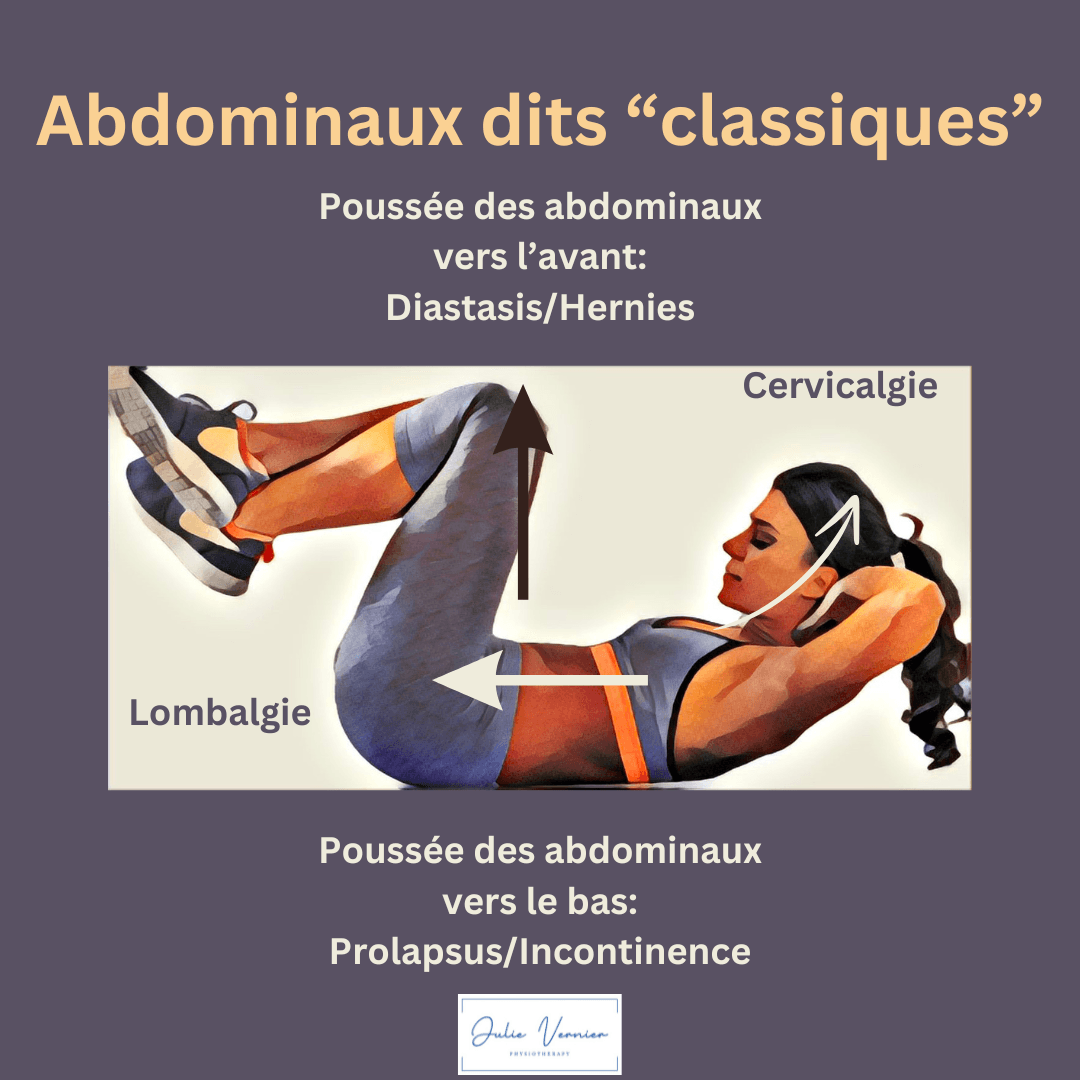
Important: These same problems can be observed during: poorly managed heavy lifting, incorrect plank/core bracing, poorly coordinated breathing during sport, high-impact activities (running, jumping, carrying excessive loads, etc.).
Why choose hypopressive exercises as an alternative?
Hypopressive exercises are strongly recommended for the following reasons:
- Postural recovery: constant engagement of the spinal stabilisers through self-elongation and maintaining space between the rib cage and pelvis. After a month of practice and a good understanding of your body schema, you will already feel the benefits.
- Improvement of diastasis recti, bringing the rectus abdominis muscles together by working on the natural 'corset' function.
- Abdominal strengthening: posture (self-elongation) and hypopressive breathing engage the abdominal core and spinal stabilisers. A reduction in waist circumference of several centimetres is observed after just a few weeks of practice.
- Improved pelvic floor tone and sexual function. During hypopressives, an involuntary contraction of the pelvic floor occurs.
- Visceral action. Hypopressive breathing allows the organs to reposition. By managing intra-abdominal pressure with correctly coordinated breathing, the organs move upward through a suction effect at the pelvic level (vagina, uterus) during abdominal vacuum.
- No risk of urinary incontinence for sportswomen, women in the postpartum period (whose perineum has been under strain throughout pregnancy), or women in perimenopause or menopause (whose pelvic floor muscles may weaken). During hypopressives, the pelvic floor is always respected — there is no downward pressure on the perineum as with classic abs. In fact, as noted above, pelvic floor tone actually improves!
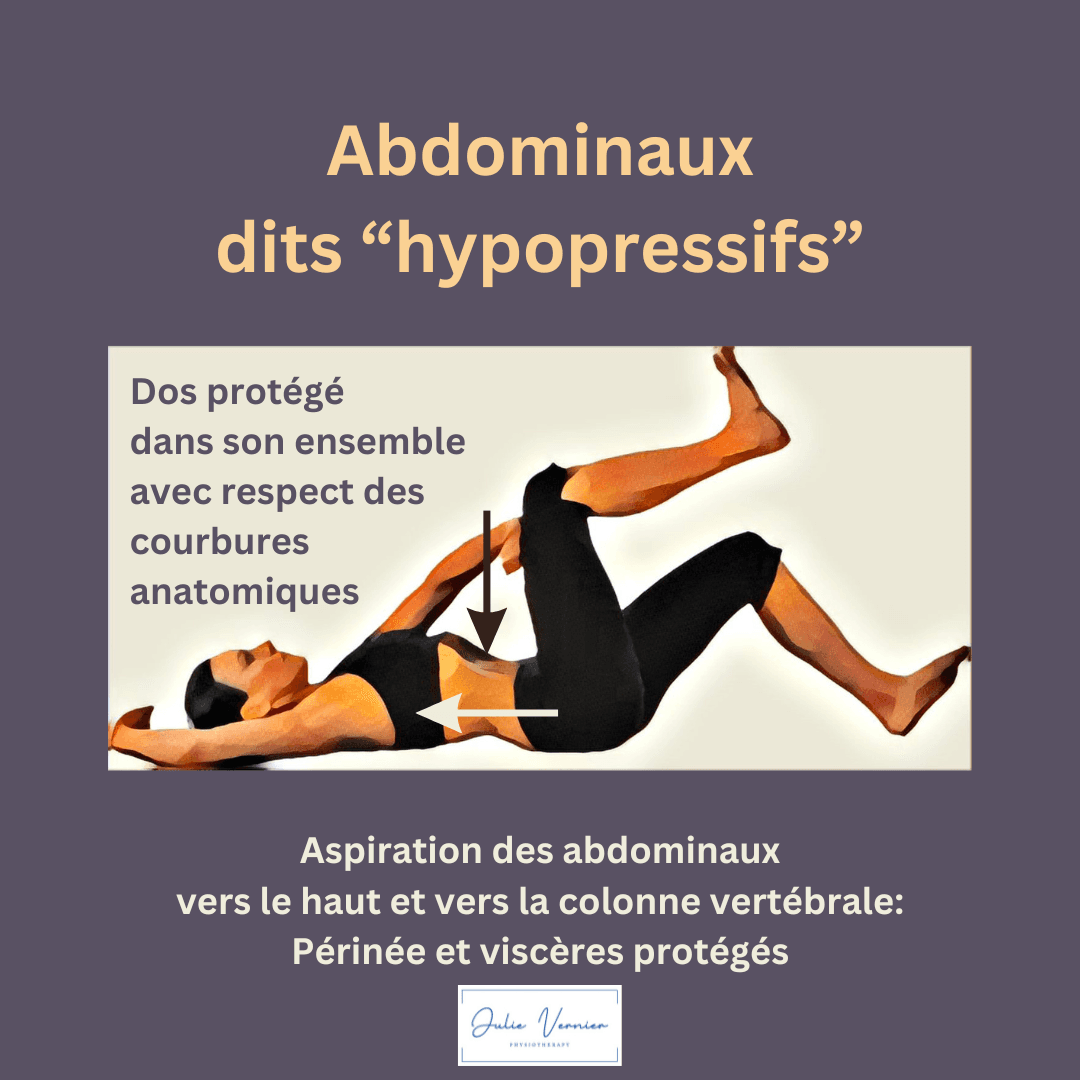
A light-hearted conclusion…
We could say that hypopressive gymnastics is the unsung superhero of fitness, while classic abs are the tired superhero in need of a coffee break.
While everyone is doing crunches, hypopressive gymnastics works quietly — reducing abdominal pressure and sculpting the muscles in a more subtle way. It is as if it were whispering to our abs: 'You don't need to shout to be strong!'.
So, leave the noisy crunches behind and embrace the elegant approach of hypopressive gymnastics. Your abs will thank you for it.