
I had surgery and the area is still swollen
After liposuction or a tummy tuck, lymphatic drainage helps reduce swelling. The effect seen in studies is moderate. Drainage is done with your surgeon's agreement.
What is happening
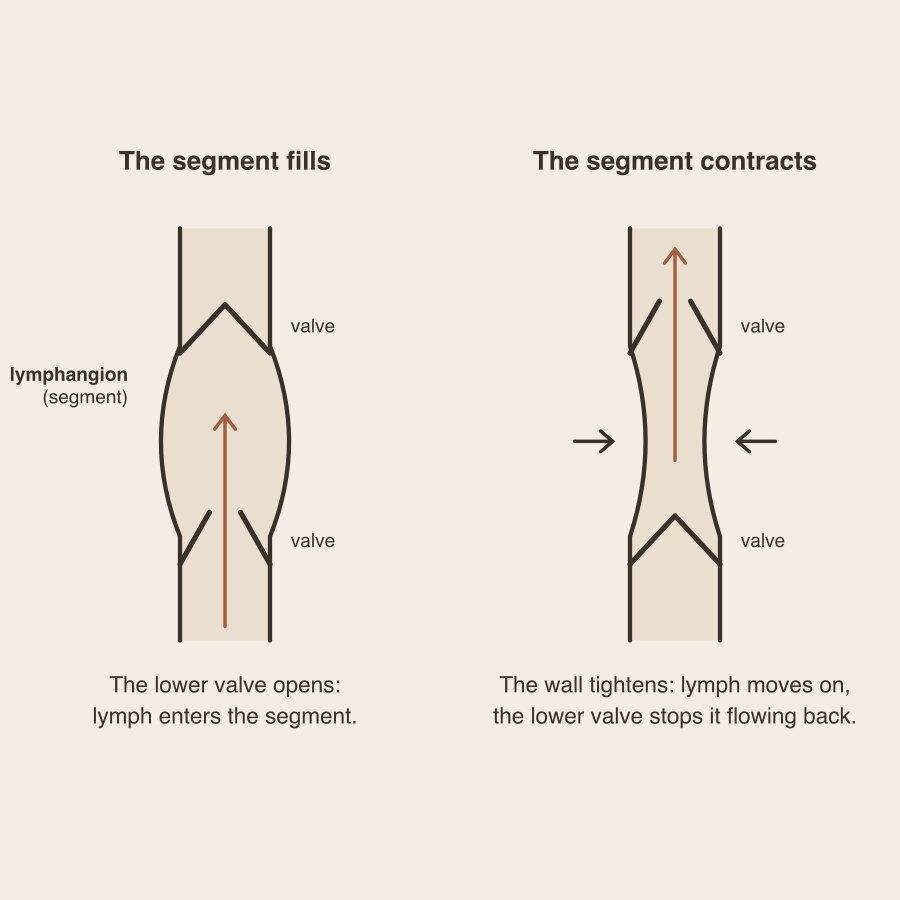
Surgery damages small lymphatic vessels. The fluid these vessels normally carry away stays where it is: the area swells, and it can harden.
The drawing shows how a healthy lymphatic vessel moves lymph along.
When to start
The best results came when drainage started early, between day 2 and day 5, over 6 to 12 sessions. Your surgeon decides when.
When to see your surgeon or a doctor first
If the swelling affects one leg only with pain in the calf or thigh, if the area becomes red and hot, or if you have a fever, see your surgeon or a doctor first. If you are short of breath or have chest pain, call 112.
What it does not do
On pain and on hardened areas, study results are inconsistent. Drainage does not make you lose weight.
How I treat it
I often see patients after a knee or hip replacement, knee ligament surgery, cosmetic surgery (liposuction, tummy tuck) or abdominal surgery, and sometimes after breast surgery.
I start with an assessment: I measure the area and assess the type of swelling. Then I carry out the drainage: gentle, slow movements stretch the skin in the direction the lymph flows. The session ends with recommendations for what comes next.
Lymphatic drainage: the first session, prices, the Leduc method →
What the research says
Seven studies on cosmetic surgery: swelling goes down, moderately, with very few side effects (Alsairefi et al., 2026). After a knee replacement, seven trials find no difference (Lu et al., 2024).